The material of the oxygen bag airbag and the production process of heat sealing
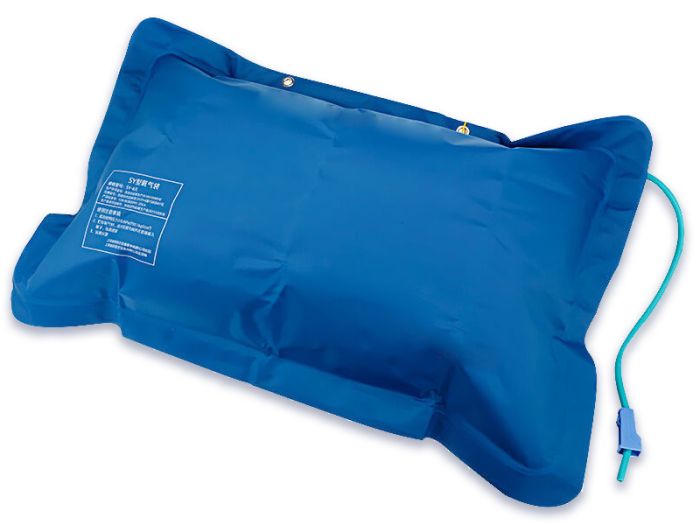
The airbag of an oxygen reservoir serves as the core component for storing and delivering oxygen. The selection of materials and the heat-sealing process directly determine the product's safety, durability, and airtightness. Below is a detailed analysis of the materials and heat-sealing production process for oxygen reservoir airbags:
.jpg)
I. Airbag Materials: Balancing Safety and Performance
The airbag of an oxygen reservoir must meet requirements such as being non-toxic, harmless, pressure-resistant, flexible, and aging-resistant. Common materials include:
Nylon Fabric (e.g., 190T Nylon)
Features:
- Lightweight and flexible, easy to fold and carry.
- Excellent abrasion resistance and superior tear resistance.
- High chemical stability, non-toxic, and harmless, meeting medical-grade standards.
Applications:
- Widely used for the main body of oxygen reservoir airbags, especially suitable for portable designs.
- Often laminated with materials like PVC or TPU to enhance airtightness.
Polyvinyl Chloride (PVC, e.g., PVC-1300)
Features:
- Excellent airtightness, capable of withstanding high pressure (e.g., 10kPa ± 0.5kPa).
- Resistant to chemical corrosion and unlikely to react with oxygen.
- Low cost and easy to process.
Applications:
- Used alone as the airbag material or as an inner layer laminated with nylon fabric to improve airtightness.
- Medical-grade PVC must be selected to avoid the migration of harmful substances such as plasticizers.
Thermoplastic Polyurethane (TPU)
Features:
- More flexible than PVC with stronger aging resistance.
- High transparency, making it easy to monitor oxygen levels.
- More environmentally friendly than PVC and recyclable.
Applications:
- Used as a high-end material for oxygen reservoir airbags, suitable for long-term use scenarios.
- Often laminated with nylon fabric to form a "TPU + Nylon" structure, balancing strength and airtightness.
Rubber Materials (e.g., Natural Rubber, Silicone Rubber)
Features:
- Excellent elasticity and strong pressure resistance, but relatively heavy.
- Natural rubber is prone to aging, while silicone rubber offers superior high-temperature resistance and aging performance.
Applications:
- Traditionally used for oxygen reservoir airbags but increasingly replaced by lightweight materials.
- Silicone rubber is used in special scenarios, such as high-temperature or high-pressure environments.
II. Heat-Sealing Process: Ensuring Airtightness
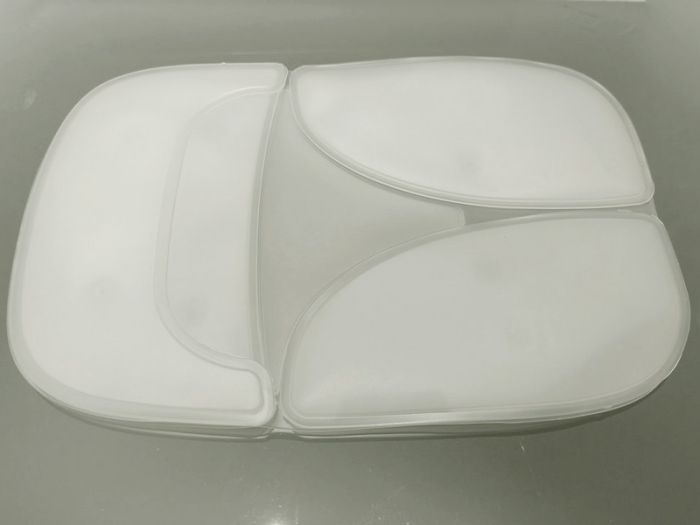
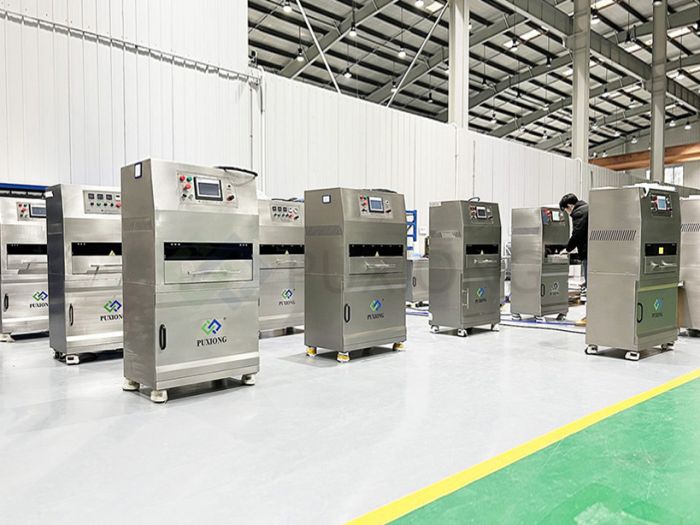
Heat-sealing is a process that uses high temperature or high-frequency electromagnetic fields to locally melt materials, achieving a sealed connection. The heat-sealing of oxygen reservoir airbags must meet requirements such as leak-proofness, pressure resistance, and aging resistance. Common processes include:
High-Frequency Welding (High-Frequency Heat-Sealing)
Principle:
- Utilizes a high-frequency electromagnetic field (27.12 MHz) to generate frictional heat in polar molecules (e.g., PVC, TPU), melting the material surface.
- Under pressure, the melted layers fuse to form a sealed seam.
Advantages:
- Fast welding speed (within seconds), high efficiency.
- Strong sealing performance, with seam strength matching that of the material itself.
- Suitable for welding complex shapes (e.g., curved or irregularly shaped airbags).
Applications:
- Welding the main body of PVC or TPU airbags and sealing the connection points of air valves.
- High-frequency power and welding time must be controlled to avoid material scorching or insufficient welding.