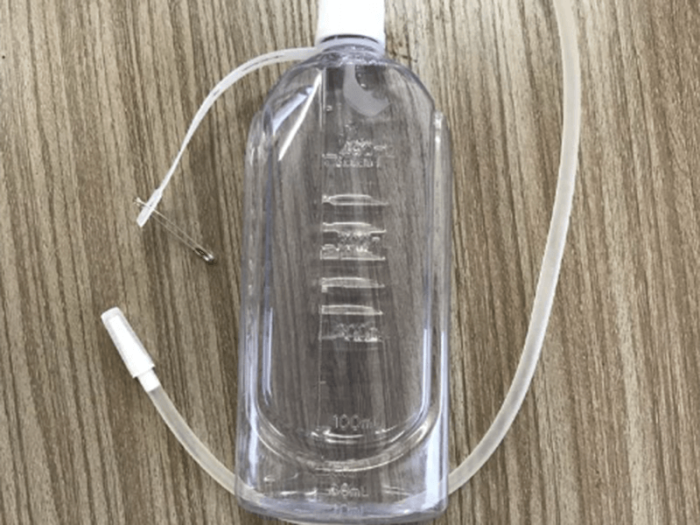
Introduction to adhesive ostomy bags
An ideal ostomy bag should not only be able to properly contain stoma excrement of varying volumes and characteristics, but also effectively prevent leakage onto the skin around the stoma. Adhesive ostomy bags, because their base plate adheres to the surrounding skin, provide excellent protection for the skin around the stoma.
1. Structurally: Ostomy bags are divided into one-piece and two-piece types; the ostomy bag and base plate are integrated. The ostomy bag can be directly attached to the abdominal wall, making it easy to use. It is for single use only; the base plate is thin, soft, and has good skin compatibility and conformity. It consists of two parts: the ostomy bag and the base plate. The base plate adheres to the abdominal wall; the ostomy bag can be removed, washed, and reused, and the direction of the bag opening and ventilation can be easily changed. Two-piece ostomy bags are available in self-adhesive and ring-lock types. The former is soft and comfortable, and easy to use; however, it is less discreet and conforms less well than the one-piece ostomy bag; it is also more expensive. Ostomy bags come in open and closed types. Open bags are reusable, while closed bags are for single use only. Ostomy bags are also available with and without carbon sheets. Some models also come with a bath cover for convenient bathing.
2. Functionally: Ostomy bags are divided into rectal and urinary ostomy bags.
(1) Rectal Ostomy Bag: For patients with rectal stomas. Suitable for patients whose excrement is stool.
(2) Urinary Ostomy Bag: For patients with urinary tract stomas. For patients with reflux, suitable for patients whose stoma discharges watery liquid excrement.
(3) Open Bag: Easy to empty, requires fewer changes, washable, suitable for patients with larger, looser stools, used in conjunction with a stool bag clamp.
(4) Closed Bag: Disposable, convenient, no washing required, can use a deodorizing filter, suitable for patients with formed stools, requiring 1-2 changes daily.
3. By color: Ostomy bags are divided into transparent and opaque types. Transparent bags facilitate observation of the stoma and excrement, especially suitable for patients in the early stages of stoma surgery and older patients. Opaque bags prevent patients from directly seeing feces, reducing visual stimulation.
4. By adhesive: Ostomy bags are divided into zinc oxide adhesive and protective adhesive types. Zinc oxide adhesive: Strong adhesion but poor absorbency and skin adaptability. Protective adhesive: Good adhesion, absorbency, and skin adaptability.
5. By base: Ostomy bags are divided into flat, slightly convex, and convex types. Flat base: Suitable for stoma patients with flat skin around the stoma. Slightly convex base: Requires safer wearing; suitable for slight stoma retraction; stoma flush with the stoma; skin folds; skin scars, depressions, etc. Convex base: Used for special stoma conditions, such as depressions, retraction, or improper placement.
6. By whether it contains carbon sheets: Ostomy bags are divided into those with carbon sheets and those without.
.jpg)