Surgical robot protective case heat sealing machine
The heat-sealing machine for surgical robot protective sleeves (also known as sterile isolation sleeves or instrument sleeves) is a critical piece of equipment in medical device manufacturing, requiring extremely high precision, cleanliness, and reliability.
Core Application: Why is a dedicated heat-sealing machine needed?
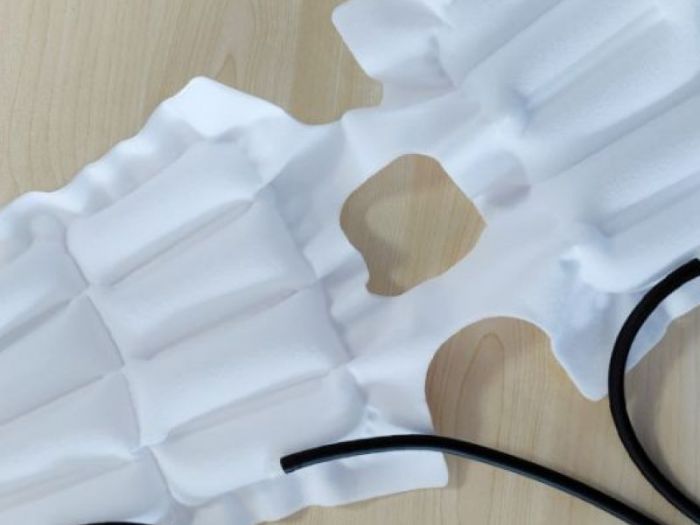
The robotic arms of surgical robots (such as the da Vinci system) need to remain absolutely sterile during surgery. Disposable sterile protective sleeves are used to wrap the non-sterile robotic arms, establishing a sterile barrier between the patient and the robot.
Materials: Typically high-strength, hypoallergenic medical-grade composite films, such as multilayer co-extruded films (possibly containing TPU), requiring sterility, dust-free conditions, no chemical migration, and high puncture and tear resistance.
Challenges:
Sealing Strength: Must withstand the pulling and torsional forces of the complex movements of the robotic arm.
Absolute Seal (Airtight/Liquid Tight): Prevents the penetration of any liquid or microorganisms.
Non-Damaging Seal: Must not produce sharp edges, debris, or thermal damage, avoiding tearing of the glove or contamination of the surgical area.
High Precision and Consistency: The protective sleeve has a complex shape with precise holes and contours, requiring highly accurate welding trajectories.
Production Environment: Typically manufactured in cleanrooms (e.g., Class 10,000 or Class 100,000).
Equipment Type and Technology Selection: This type of heat sealing machine is a high-precision medical heat sealing machine, primarily employing the following technologies:
1. High-Frequency (High-Frequency) Heat Sealing Machine (Mainstream and Preferred)
Principle: Utilizes a high-frequency (high-frequency) electric field to generate heat and melt polar material molecules through friction. Ideal for medical-grade TPU, PVC, and other materials.
Advantages:
High Welding Strength: The material is fused together, achieving strength close to the base material.
Absolutely Reliable Sealing: Achieves complete airtightness and watertightness.
Neat Edges: With a die, welding and cutting can be completed in one pass, resulting in smooth, burr-free edges—a core requirement for medical products.
High Efficiency: Welding cycles are measured in seconds.
Equipment Form: Mostly precision flat-panel or rotary type, controlled by a PLC system.