
The high-frequency (high-frequency wave) production process of urine bags
High-Frequency Electromagnetic Field Heating:
Utilizes a high-frequency (Koshūha) oscillator to generate an electromagnetic field, polarizing plastic molecules to generate heat and achieve uniform welding.
.jpg)
High Efficiency and Automation:
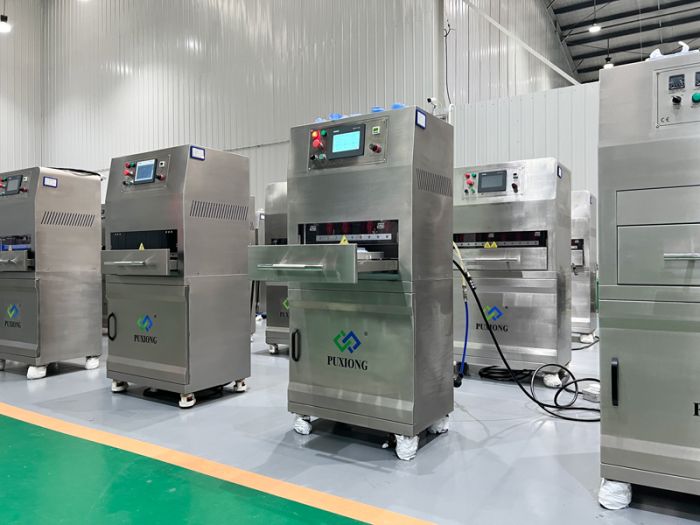
Integrated into fully automated production lines, supporting end-to-end automation for processes such as tube welding, reverse osmosis membrane welding, bag body welding, and handle assembly. For example, a four-station rotary design enables simultaneous production of four finished products per cycle, significantly multiplying output capacity.
High-Quality Sealing:
The welded areas are smooth, flat, and high-strength, complying with medical standards to prevent urine leakage risks.
Strong Material Compatibility:
Supports various plastics such as PVC, TPU, and EVA, as well as composite processing of materials like leather and fabric, meeting requirements for flexibility, transparency, and biocompatibility.
Safety and Energy-Efficient Design
Interference Prevention and Shielding:
Equipped with anti-electromagnetic interference devices and high-frequency magnetic field shielding systems to minimize impact on other equipment or the human body.
Spark Suppression:
Real-time detection of abnormal currents to prevent damage to molds and materials.
Energy Efficiency and Environmental Friendliness:
Actual welding current is only about 0.6A, with energy consumption around 3kW, significantly more energy-efficient than traditional equipment.
Process Flexibility
Custom Mold Design:
Customizable molds for complex three-dimensional structures or special shapes based on different specifications. For example, neonatal urine bags can be manufactured with ergonomic designs by combining injection-molded cutting lines with high-frequency thermal sealing.
.jpg)