Introduction to the materials, uses and production methods of anti-toxic suits
In certain special industries, various toxic gases and particulate matter pose significant hazards to human health. To meet the needs of workplace safety and protect workers' lives and health, protective chemical suits have emerged. This article provides a detailed introduction to the materials, applications, and production methods of chemical protective suits.
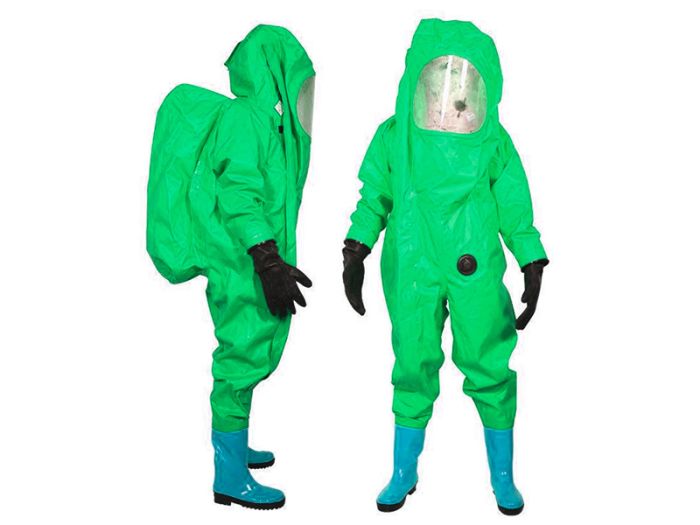
I. Materials for Protective Chemical Suits
Key materials used in protective chemical suits include:
-
Nylon
Nylon, a synthetic fiber, boasts high strength and wear resistance. Nylon-based suits offer good breathability and comfort but lack inherent chemical protection. Thus, nylon is typically combined with other materials to enhance protective efficacy. -
Polytetrafluoroethylene (PTFE)
PTFE is an exceptionally stable polymer with excellent corrosion and chemical resistance. PTFE-based suits effectively resist penetration by toxic gases and liquids but are non-breathable. As such, PTFE is often used as a sealing layer in composite materials. -
Neoprene (Chloroprene Rubber)
Neoprene, a highly durable and elastic synthetic rubber, provides strong abrasion and tear resistance. Neoprene suits offer moderate chemical protection but poor breathability, which may cause discomfort during prolonged wear. -
Aramid
Aramid, a high-performance synthetic fiber, exhibits exceptional strength, heat resistance, and chemical stability. Aramid suits excel in extreme environments involving high temperatures, pressure, acids, or alkalis, offering superior chemical protection. However, their high cost limits large-scale adoption.
II. Applications of Protective Chemical Suits
These suits are primarily used in:
-
Chemical Manufacturing
Workers in chemical plants are exposed to toxic gases and particulates. Protective suits minimize health risks and reduce casualties from poisoning incidents. -
Laboratory Research
When handling toxic chemicals or biological agents, researchers rely on chemical suits for personal safety and to prevent environmental contamination. -
Mining Operations
Mining environments often generate toxic gases and dust. Protective suits safeguard miners and lower risks of fatal exposure. -
Military Operations
Chemical suits are critical for soldiers to withstand battlefield hazards like chemical agents and smoke, enhancing survival rates.
III. Production Methods for Protective Chemical Suits
Key production steps include:
-
Design and Drafting
Designers create detailed blueprints tailored to user requirements and scenarios, prioritizing material selection, structural integrity, and functionality. -
Material Procurement
Materials are sourced based on design specifications, with rigorous verification to ensure compatibility with suit types. -
Prototype Development
Initial samples are produced for quality and performance testing. -
Mass Production
Post-approval, bulk manufacturing begins. Quality control is enforced at every stage. A pivotal step involves welding pre-cut material sheets using High-Frequency (HF) Plastic Welding Machines. These devices employ high-frequency electric fields to generate heat through molecular friction, enabling precise and durable plastic fusion—ideal for chemical suit assembly.
.jpg)