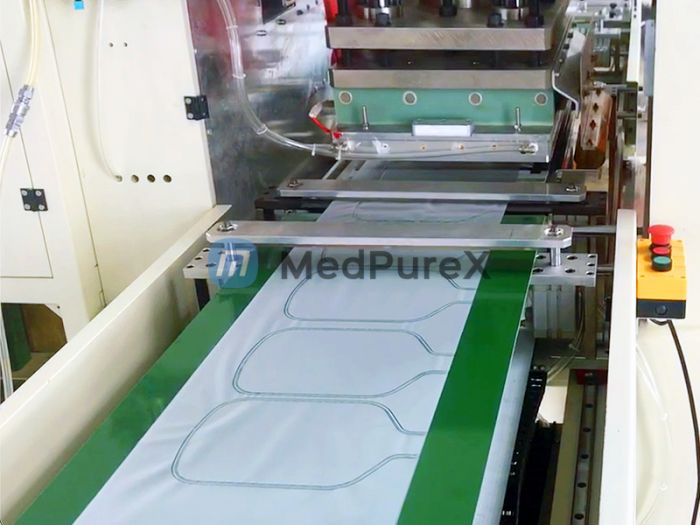
Application of ultrasonic heat sealing machine in medical industry
Technical Advantages
Ultrasonic heat sealing machines utilize high-frequency vibrations to generate molecular friction heat, enabling efficient, needle-free, and chemical-free sealing and welding. Key advantages include:
- High weld strength, approaching the material’s native strength;
- Sterile welding process, eliminating contamination risks associated with traditional suturing;
- Rapid welding speeds, 5–6 times faster than conventional methods, with low energy consumption.
These features align with the medical device industry’s stringent requirements for material biocompatibility, production cleanliness, efficiency, and cost control.
Application Scenarios
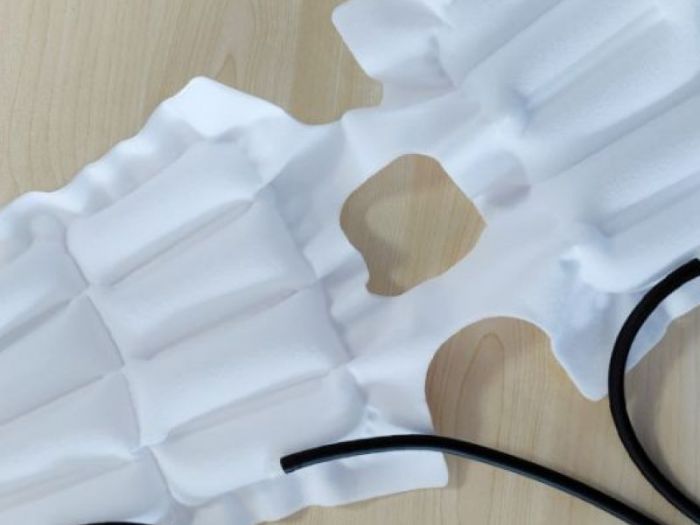
- Disposable Medical Products: Infusion bags, sterile packaging, masks, surgical gowns, etc., requiring fast, contamination-free sealing.
- Implantable Devices: Artificial joints, cardiac stents, etc., where welding must avoid thermal damage and ensure biocompatibility.
- In Vitro Diagnostic (IVD) Equipment: Sensor encapsulation in blood analyzers, and sealing of medical device housings/internal wiring.
Market Trends & Opportunities
- The global medical device market reached USD 518.46 billion in 2023, projected to grow to USD 886.8 billion by 2032 (6.3% CAGR), driven by aging populations and healthcare spending.
- Policy support (e.g., China’s Regulations on Quality Management of Medical Device Operations) and domestic substitution are accelerating technological upgrades.
- Ultrasonic heat sealing, as a high-efficiency, clean production tool, is poised to expand its role in this growth.
Challenges & Solutions
- Material Diversity: Optimization of welding parameters for plastics, non-wovens, metals, etc.
- Reliance on Imported High-End Equipment: Domestic innovation is needed to overcome technical barriers, improve precision, and enhance material compatibility.
Outlook
Ultrasonic heat sealing technology holds significant potential in medical device manufacturing, particularly in disposables, implants, and IVD. With rising demand and advancing domestic capabilities, its application scope and depth are expected to grow substantially.
.jpg)